How CBSE Schools Prepare Children for an AI-Driven Future
 By Shemrocks Patiala
Artificial intelligence (AI) is no longer just a concept from science fiction. It is already changing how we learn, work and solve problems. This raises an important question for parents: How can schools prepare children for a future shaped by AI?
Today, education is evolving beyond traditional academic learning to include technology awareness, creativity, logical thinking and problem-solving skills. The aim is not simply to teach children how technology works, but to help them understand it, use it responsibly and approach new challenges with confidence.
For parents exploring CBSE schools in Patiala, understanding how a school integrates technology and innovation into everyday learning can help them make informed decisions. A learning environment that encourages curiosity, creativity and practical application can help children develop the skills they need to adapt to a rapidly changing world.
Why Does AI Education Matter for Children Today?
Artificial intelligence refers to technology that enables machines to analyse information, recognise patterns, and perform tasks that usually require human intelligence.
Children already interact with AI through technologies such as:
- Voice assistants
- Recommendation systems
- AI-powered learning apps
- Digital tools
- Online platforms that use AI
However, using technology regularly does not necessarily mean children understand how it works.
Children need to understand how technology works, how to use it responsibly, and how to think critically when engaging with digital tools.
That’s why AI skills for children are becoming increasingly important in modern education.
The aim is not to turn every child into a programmer. Instead, it is to develop curiosity, logical thinking, and problem-solving abilities that will help them navigate a technology-driven world.
What Does AI Learning Mean in Schools?
School-level AI education involves more than simply coding or developing advanced AI systems.
It introduces children to important concepts such as:
- How computers learn from data
- How data influences decisions
- How technology can help solve problems
- The importance of ethical AI use
Some progressive CBSE schools introduce these ideas through age-appropriate activities, projects, and discussions.
For younger children, this may include pattern recognition games, logic-based activities and creative problem-solving. Older students can learn about coding, basic data concepts, robotics, and artificial intelligence applications.
This gradual approach helps children build confidence without feeling overwhelmed by technology.
How Are CBSE Schools Building Future-Ready Learners?
The nature of education is evolving. Academic knowledge remains important, but children also need skills that help them adapt to changing circumstances.
Many CBSE schools are placing greater emphasis on the following areas:
1. Computational Thinking
Computational thinking helps children approach problems logically and systematically.
Children learn to:
- Break complex problems into simpler steps
- Identify patterns
- Develop possible solutions
- Test and refine ideas
These skills are useful across different subjects and careers, not just in technology-related fields.
2. Creativity and Innovation
AI may help generate ideas, but human creativity remains essential.
Schools encourage children to imagine, design, and create through:
- Projects
- Experiments
- Design challenges
- Practical activities
This combination of creativity and technology supports future-ready education.
3. Digital Awareness and Responsibility
Children need to understand how to use technology safely and responsibly.
AI education also encourages discussions about:
- Data privacy
- Digital responsibility
- Accuracy and reliability of information
- Ethical use of technology
These conversations help children develop responsible digital habits.
How Does AI Education Connect With Experiential Learning?
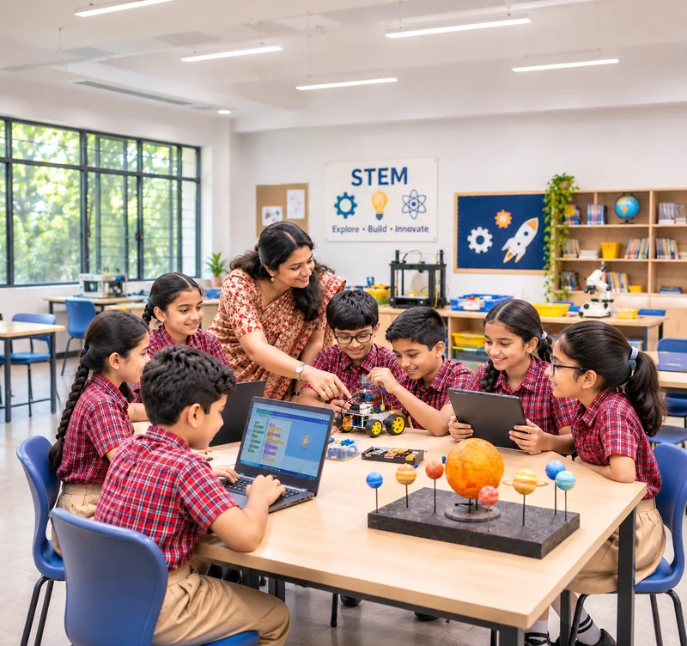
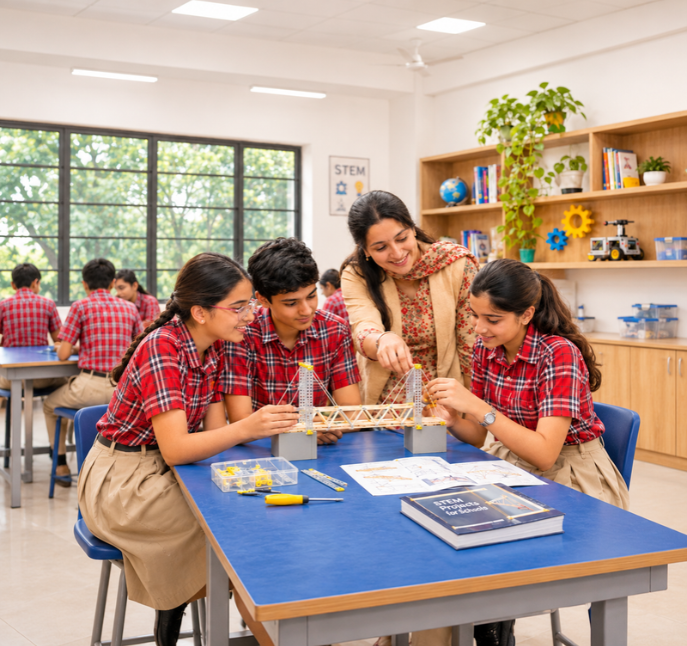
Children often understand concepts more clearly when they can explore and apply them through hands-on activities. This is where experiential learning plays an important role.
Instead of only reading about artificial intelligence, children can explore related concepts through:
- Real-world projects
- Problem-solving tasks
- Experiments
- Technology-based challenges
For example, students could complete a simple coding project, analyse patterns in data or design solutions to everyday problems.
This approach encourages learning by doing, allowing children to participate actively rather than simply memorising information.
AI Skills for Children to Develop for the Future
Technology will continue to evolve, but certain skills will remain valuable.
Critical Thinking
Children need to learn how to question information, analyse ideas, and make informed decisions.
AI tools can generate answers, but children must be able to assess whether those answers are accurate and reliable.
Problem-Solving Skills
As AI becomes more common in workplaces, the ability to identify problems and develop practical solutions will remain important.
Problem-solving activities help children become more adaptable and independent thinkers.
Collaboration Skills
Future careers will increasingly involve collaboration between people and the use of technology.
Team projects help children develop communication and teamwork skills.
Adaptability
The ability to learn new tools and adjust to change will become increasingly important.
Schools that focus on future-ready education help children develop the confidence to face new challenges.
Are Schools Preparing Children for Future Careers?
The careers available to today’s children may look very different from those we know now. Technology, data and innovation are likely to play important roles across many professions.
However, future success will depend on more than technical knowledge. Children will also need:
- Creativity
- Communication
- Leadership
- Emotional intelligence
- Decision-making skills
That’s why schools that prepare students for future careers focus on developing the whole person, rather than teaching technology in isolation.
A balanced education combines strong academic foundations with practical skills and personal development.
What Should Parents Look for in a Future-Ready School?
When comparing the top schools in Patiala, parents should look beyond smart classrooms and digital resources.
A forward-looking school should focus on the following areas:
Meaningful Integration of Technology
Technology should support meaningful teaching and learning rather than replace traditional teaching methods or human interaction.
Hands-On Learning Opportunities
Children should have opportunities to experiment, create, and apply their knowledge in practical situations.
Skilled Educators
Teachers should guide students in using technology wisely and responsibly.
Balanced Development
The school should develop both technical understanding and essential human skills, including communication, creativity, and critical thinking.
Parents searching for the best school in Patiala should consider how well a school prepares children for a changing world.
How Shemrock School Patiala Supports Future-Ready Learning
When comparing CBSE schools in Patiala, parents should consider how effectively a school encourages creativity, problem-solving, and adaptability. A future-ready school should not only teach children to use technology but also encourage them to think independently and apply their knowledge in meaningful ways.
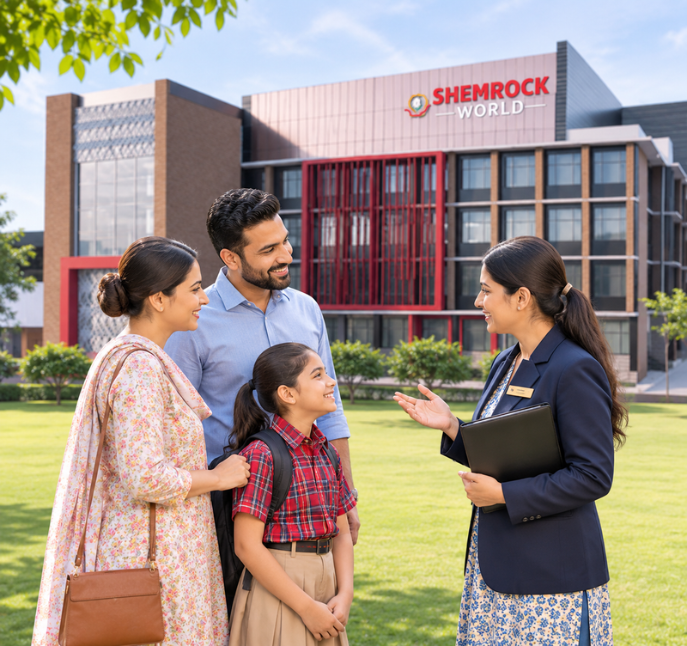
Shemrock School Patiala aims to create a learning environment where children can develop curiosity, confidence and practical understanding. Our learning approach encourages children to explore concepts through hands-on activities, projects and real-world experiences.
By combining experiential learning, technology awareness and learning by doing, we aim to help children develop the skills needed for tomorrow.
Why Future-Ready Education Matters More Than Ever
AI will continue to change how people work and live. Children entering school today will grow up in a world where technology influences nearly every profession.
The purpose of AI education is not to predict which careers children will pursue. It is to equip them with the confidence and skills to adapt to future opportunities and challenges.
For families exploring top schools in Patiala, a school that combines academic learning with technology awareness and practical experiences can provide a strong foundation for the future.
Shemrock School Patiala aims to create a learning environment where children develop curiosity, creativity, and the confidence to become capable learners in an evolving world. The future belongs not only to those who understand technology but also to those who know how to use it with imagination and responsibility.